
Plant Lighting Case Study: PPFD and Spectrum Measurement for LED Light Recipes with PG200N

Spectral and PPFD Measurement for Plant Growth Lighting
From light recipes to measured PPFD — one meter, every parameter that matters
LED lighting is now an established part of modern agriculture, and the plant lighting market has reached a more mature, stable stage. Its applications continue to matter for the advancement of modern agriculture, food safety, and the response to climate change. With adoption widespread, attention has shifted from whether to use LED to how to use it well: designing light recipe that suit each crop, and confirming that the light actually delivered matches the design.
Companies develop grow lights according to a light recipe, aiming to use light energy more effectively and support plants at each stage of growth. From germination to root and stem development, flowering, and fruiting, different stages call for different light recipes. A light recipe is defined by three main factors: light quantity (light intensity), light quality (spectral range), and photoperiod.
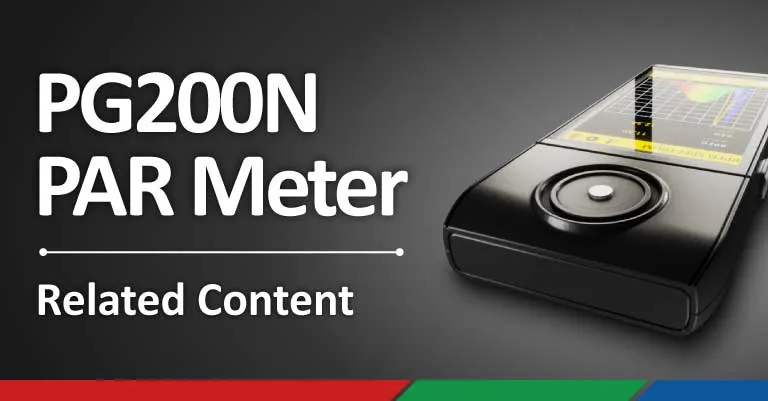
This case study explores how LED plant lighting teams can use the UPRtek PG200N Spectral PAR Meter to measure PPFD and spectral output, and adjust plant lighting sources based on the results.
The Challenge: Matching Light Recipes to Different Plants and Plant Factory Setups
Beyond light quantity, light quality, and photoperiod, Photosynthetic Photon Flux Density (PPFD) is especially important for controlling plant growth. PPFD describes how many photons within 400–700 nm reach a defined area in one second.
Plants come in many species and categories, each with different PPFD requirements, and light intensity affects plants differently across wavelengths.
Plant factories add further complexity. Because different types of plants are equipped with different types of light sources, combining the factory setup with the right light source becomes complicated. Under these conditions, being able to see the quality of a light source and the spectral changes across bands directly allows the artificial light source to be adjusted in time.

Spectral and PPFD measurement of plant growth lighting
Measuring PPFD and Spectrum on Site with the PG200N
To address this need, the PG200N Spectral PAR Meter provides a range of parameters for monitoring plant lighting, including PPFD and PFD. It can measure PPFD values across different band ranges, helping users understand the light conditions affecting plant growth and adjust the light source to support plant quality.
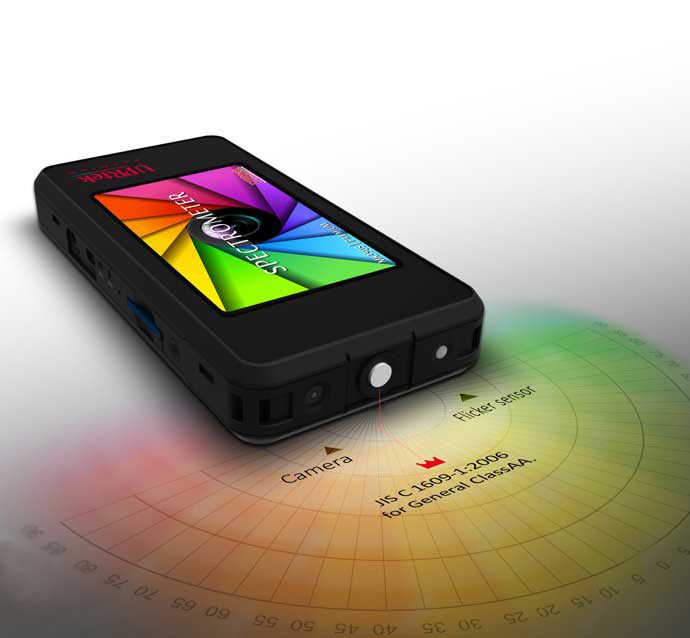
The PG200N also features a detachable sensor head designed for the measurement environment, so it can be used upright, lying flat, stand-alone, or even synchronized across multiple light sources.
For plant factories, where each plant type may use a different light source, a handheld spectrometer that offers different measurement methods can overcome distance and space constraints, improving measurement efficiency and flexibility.

Measurement with the PG200N detachable sensor head

Get your FREE copy of UPRtek Grow Light Handbook!
Explore how lighting impacts plant growth – from spectrum tuning to measurement tools. Perfect for growers, researchers, and horticulture lighting professionals. Just enter your email to download instantly.
Supporting Light Recipe Control in Plant Growth
By measuring PPFD and the spectral changes of different bands, lighting teams can adjust artificial light sources in time. This can help match the light recipe to the requirements of each plant species and category.
Because the light source shapes how plants grow, controlling it successfully is closely tied to controlling how plants develop. Detecting light quality is therefore a practical step toward helping plants grow effectively and healthily under LED light.

Summary
Light quantity, light quality, and photoperiod all shape how plants grow, and PPFD is a key parameter for controlling it. The PG200N Spectral PAR Meter gives LED plant lighting teams PPFD and PFD readings across band ranges, with a detachable sensor head for flexible measurement setups. With measured PPFD and spectral data on hand, plant lighting teams can move from designing a light recipe toward adjusting it based on what the light source actually delivers.
Other Posts:
- How Does Far Red Light Affect Plant Growth?
- UVA Spectrum in Indoor Agriculture: Enhancing Crop Quality & Yield with UV-A Lighting
- Untangling the Differences Between PAR, PPF, PPFD, and PFD
- Optimizing Indoor Agriculture: Leveraging the Power of UVA Spectrum
- What Is a Grow Light? How It Works and Different from Regular Bulbs?
- Grow Lights for Seedlings: What Light Is Best for Growing Seedlings?
- What’s the Difference Between Grow Lights and Sunlight? Can They Replace the Sun?
Hot Product
Handbook Series
The Flicker Handbook
Everything thing you need to know about Flicker, an insidious, potentially serious lighting artifact impacting visual safety for public places like hospitals, offices, libraries, and more...
About UPRtek
United Power Research and Technology
UPRtek (est. 2010) is a manufacturer of portable, high-precision light measurement instruments; Handheld Spectrometers, PAR meters, Spectroradiometers, Light Calibration Solutions.
UPRtek HQ, R&D and manufacturing are all based out of Taiwan, with Worldwide representation through our certified Global Resellers.
Latest Articles

Category
0 Comments