
Flicker Measuring
Flicker Problems, Flicker Measurement , Flicker Effects
Flicker is the problem certain lights have, exhibiting a subtle pulsating or strobing effect, most of the time barely noticeable by the human eye – however, more organizations are paying attention to flicker because it is being implicated in triggering a host of health related issues such as epilepsy attacks, migraines, fatigue, reduced visual task performance, distraction and visual impairment.

MK350S Premium
Flicker Is No Longer Invisible
Flicker is no longer the invisible problem it used to be — most lighting professionals today are well aware it exists, and a growing set of national and international standards now define what counts as a safe or harmful flicker level, from the EU’s Commission Regulation (EU) 2019/2020 (PstLM ≤ 1.0, SVM ≤ 0.4) to the WELL Building Standard’s Feature L08 flicker requirements (PstLM ≤ 1.0, SVM ≤ 0.6 per NEMA 77-2017). The real challenge has moved on: how do you quantify flicker accurately on site, without hauling an oscilloscope from project to project? UPRtek — the handheld spectrometer manufacturer — built a Flicker meter to solve exactly that, embedding Flicker measurement functions into a portable instrument so lighting experts can verify compliance wherever the light is actually installed.
The Root Cause of Flicker
The source of this problem is the power current, particularly a conflict with the mains (from the outlet) and the power supply (of the light). Dimmers also induce or increase flicker. All lights running on AC power have this problem to a certain degree. Fluorescent lights had long been most criticized for high flicker before more recent advances.

From high-voltage transmission to low-voltage delivery: a transformer steps down the power, but the underlying AC current — the root cause of flicker — stays the same.
LED Has Flicker Problem
LEDs also exhibit the same symptoms. LEDs further complicate the issue with their changing power needs that come with temperature fluctuations, and how that power is delivered varies by design. Many are equipped with what is called an LED driver, which sits between the power supply and the LED itself and regulates or maintains a constant voltage to it — a well-designed driver will adequately mitigate flicker, though components borrowed from other light types (e.g. transformers) can still cause problems. Others use ‘driverless’ or AC-direct designs that skip the driver module altogether, instead routing mains power through simple passive components or segment-switching circuits that turn LED strings on and off in step with the incoming voltage. Either way, the light output is only as flicker-free as the circuit behind it — driver-based and driverless designs alike can flicker if the current isn’t properly regulated.

A dimmer, driver, and LED lamp all sit on the same power path — any instability introduced upstream carries through to the light output.
Flicker Standard
Flicker Standard has moved from guidance to law. Since September 2021, the EU’s Commission Regulation (EU) 2019/2020 — amended by Regulation (EU) 2021/341 — has made flicker testing mandatory for LED and OLED light sources placed on the EU market. The regulation defines two Temporal Light Artefact (TLA) metrics referenced in IEC TR 63158: PstLM (short-term flicker perceptibility, limit ≤ 1.0) and SVM (Stroboscopic Visibility Measure, limit ≤ 0.4). Manufacturers and lighting designers exporting to Europe now need documented test data for both values — Flicker Index and Percent Flicker alone are no longer sufficient for compliance.

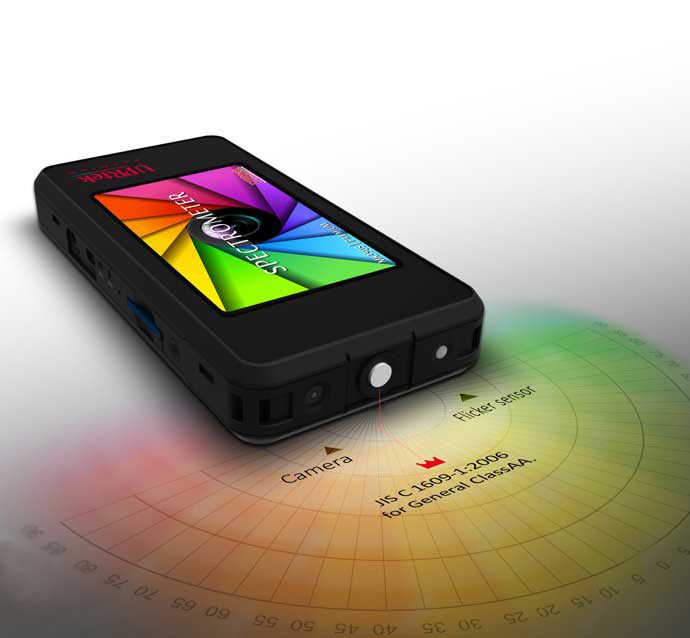
MK350S Premium Handheld Spectro-Flicker Meter
The MK350S Premium supports Flicker Index, Percent Flicker, flicker frequency and real-time spectrum monitoring, and adds SVM (Stroboscopic Visibility Measure) assessment in line with IEEE PAR 1789 — and when paired with UPRtek’s uFlicker PC Software, reports PstLM alongside SVM for complete verification against both EU Ecodesign (EU) 2019/2020 and WELL Building Standard L08 flicker requirements. Packed into a lightweight 260g handheld body with a 4.3″ touchscreen, the MK350S Premium moves flicker testing out of the lab and onto the factory floor or job site.

Flicker Handbook
UPRtek set the goal to provide the 1st flicker measurement handbook and to be the pioneer of educating the market to get a better understanding of flicker. UPRtek had consulted with panel manufacturers, lighting designers, lighting engineers and some international standard members of flicker measuring; it took almost one year for data collection, writing and design for the flicker educational material. In December 2016, UPRtek officially releases the newest Flicker Handbook for our readers, we hope it can help to understand flicker more and then control the flicker, at last get rid of the harm from it.

Related Posts:
- Flicker and Other Temporal Lighting Artifacts: What is TLA?
- Behind the Advancements in Technology: How Flicker Effects Impact Displays and Lighting Products
- What is a Spectrometer, Spectrophotometer, Spectroradiometer?
- What Is an Imaging Colorimeter? Applications & Features
- How to Measure Light Accurately: Why Distance Matters with Light Meters?
Handbook Series
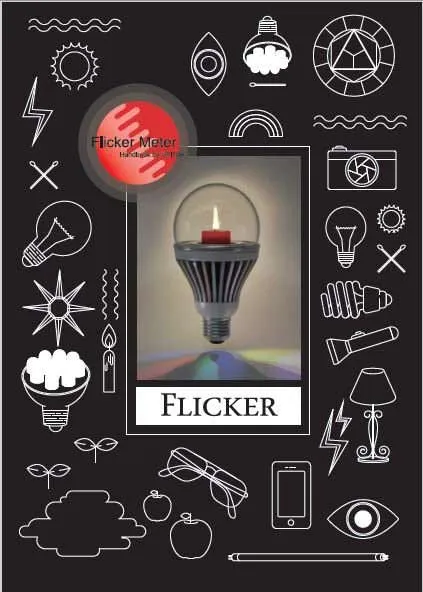
The Flicker Handbook
Everything thing you need to know about Flicker, an insidious, potentially serious lighting artifact impacting visual safety for public places like hospitals, offices, libraries, and more...
About UPRtek
United Power Research and Technology
UPRtek (est. 2010) is a manufacturer of portable, high-precision light measurement instruments; Handheld Spectrometers, PAR meters, Spectroradiometers, Light Calibration Solutions.
UPRtek HQ, R&D and manufacturing are all based out of Taiwan, with Worldwide representation through our certified Global Resellers.
Latest Articles

Category
