LED Commerce
Mobile, lab-level spectrometers are changing how we buy and sell LED products.
Specification sheets are all we used to have when trading LED products – we had to take the manufacturer or seller’s word on the actual performance. Precision Spectrometers are changing that.
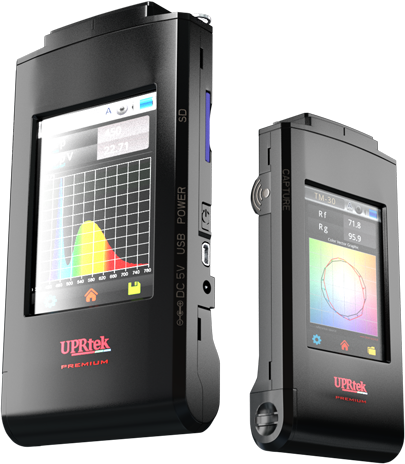
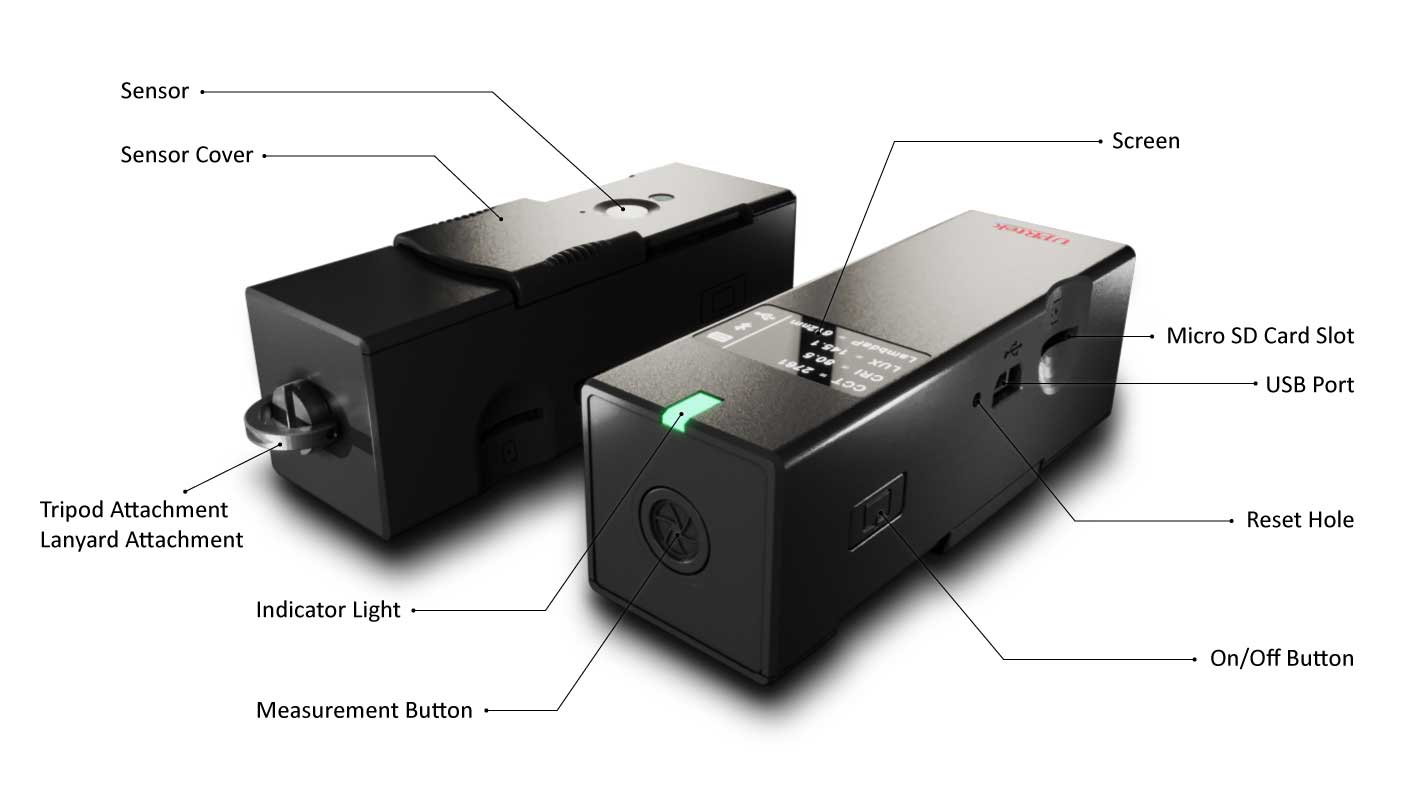
MK350N Premium Spectrometer
Photo by Charles Forerunner at Unsplash
▸MK350N Premium
▸MK350S Premium
▸LED Manufacturing
LED Commerce – Leveling the playing field
The world of LED commerce is no sure thing. Inconsistency is inherent in our industry because of the variations in mass production of LED lights and related products.
Before, all you could do was rely on spec sheets and brochures, when evaluating lighting products at remote locations; showrooms, offices, exhibitions. You could bring a simple RGB Colorimeter. But as we know, a 3-color light meter is not appropriate when measuring an entire color spectrum, and inaccurate measurements are easily challenged.
The gold-standard for precision light measurement is the integrating sphere, but it’s usually confined in laboratories and research departments, out-of-reach and not very practical for obvious reasons.
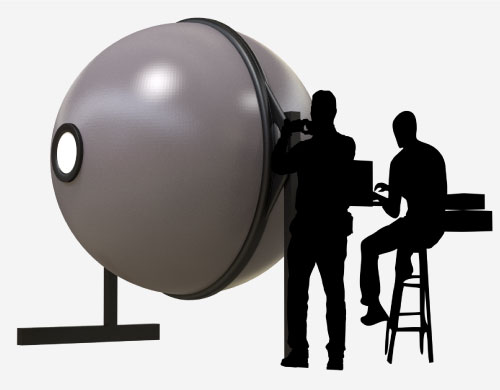
Integrating Sphere
From Product Transactions to Complete Commercial Lighting Management
In the LED market, buyers and sellers often rely on specification sheets, samples, or visual judgment when selecting products. Portable spectral measurement helps users verify lighting quality more objectively on site.
These days, LED commerce covers a lot more than buying and selling lamps — it stretches across supplier comparison, sample approval, incoming inspection, project acceptance, cross-location consistency, and post-installation checks. Bringing measurable data into each of these steps cuts down on misunderstandings and builds real trust between buyers and sellers.
Why Specification Sheets Alone Are Not Enough
Specification sheets are useful, but products with similar specifications may still deliver different visual results in real applications. Portable spectral measurement allows users to compare products directly in offices, showrooms, trade shows, and other on-site environments.
Take two lamps with near-identical CCT and CRI on the spec sheet — they can still land in very different places on Duv, SDCM, TM-30, spectral distribution, and Flicker. Those gaps show up in how the product actually looks and feels across a project. That’s why measured data matters: it gives both sides something objective to talk about, instead of arguing over a catalog page or what looks “close enough” by eye.
A Complete Commercial Workflow
Before Purchase | Product Evaluation
When you’re sizing up products from different brands or suppliers, spec sheets only get you so far — measurable parameters tell you what you’re actually buying:
- Lux
- CCT
- CRI and TM-30
- SDCM and Duv
- Spectral distribution
- Flicker
During Procurement | Supplier and Sample Approval
Before you place an order, run the sample through the same criteria you used to shortlist suppliers in the first place — it’s the easiest way to catch a mismatch early.
Upon Delivery | Incoming and Shipment Inspection
Spot checks can be carried out when shipments arrive to verify whether delivered products match approved samples.
A quick check here tells you whether batch consistency, color tolerance, and the specs you agreed on actually made it into the box before anything gets installed.
After Installation | On-Site Acceptance
Once everything’s installed, it’s worth checking the lighting under real conditions — not just whether it meets spec on paper, but whether it meets what the project actually needs.
During Operation | Maintenance and Replacement Verification
And the job isn’t over at handover — periodic measurement down the line can catch brightness dropping off, color shifting, or a replacement lamp that just doesn’t match the old ones.
Commercial Spaces and Merchandise Presentation
Step into any retail store, supermarket, or showroom, and lighting is already doing a lot of the work — it’s shaping how customers actually see the merchandise. Get color rendering, consistency, and Flicker under control, and products present better, full stop.
This piece is about measurable quality control and commercial decision-making. If you want to dig into atmosphere, visual merchandising, and design intent, that’s covered in our Lighting Design article.
Maintaining Consistency Across Suppliers and Locations
If you’re managing lighting across multiple projects or locations, consistency matters just as much as picking the right product in the first place. A handheld spectrometer lets your team compare suppliers, check batch quality, and keep every branch, region, and contractor working to the same standard.
Build measurable acceptance criteria into your procurement documents or project specs, and there’s a lot less room for buyers, suppliers, and contractors to talk past each other.
Real-World Examples: Color Rendering and Metamerism
It helps to see this play out in real cases rather than just in the abstract — so instead of going deep here, we’ll flag two issues worth knowing and point you to the full write-ups.
Color rendering affects how fresh food and other merchandise actually look, and metamerism can make two products look like a perfect match under one light — then obviously mismatched under another.
Spectrometers with high level of precision
UPRtek makes portable spectral measuring devices that you can take anywhere to measure light with lab-level accuracy. We set out to help buyers and sellers trade with real, on-the-spot, measurable data. Sellers can sell with integrity and buyers can buy with confidence. No longer does everyone have to rely on spec sheets.
Buyers also have to QC the products they receive in shipment. As we mentioned, the variables in mass LED production, behooves purchasers to sample their shipments regularly.
Our customers use our spectrometers to spot check large orders after every shipment, to make sure light quality is consistent across the entire shipment.
But the data is only as credible as the accuracy of the measuring device.
UPRtek spectrometers uses Diffraction Grating with a CMOS Linear Image Sensor to gain very tight bandwidth differentiation. Accuracy and precision of our instruments has been the bedrock of our technology and is backed up by our certifications and recognition in the industry.
MK350N Premium
Better Lighting Data for Better Business Decisions
Portable spectral measurement provides a practical way to compare, verify, and manage lighting quality on site.
For modern LED commerce, that’s bigger than just picking a lamp — it’s about making better calls at every stage, from procurement through acceptance, installation, and the years of operation that follow, with clearer standards and a lot more confidence.
Handbook Series

The Flicker Handbook
Everything thing you need to know about Flicker, an insidious, potentially serious lighting artifact impacting visual safety for public places like hospitals, offices, libraries, and more...
About UPRtek
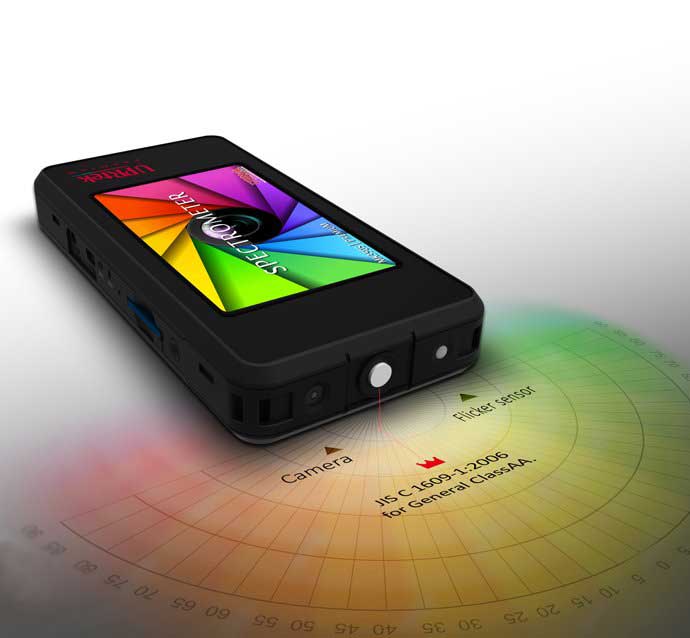
United Power Research and Technology
UPRtek (est. 2010) is a manufacturer of portable, high-precision light measurement instruments; Handheld Spectrometers, PAR meters, Spectroradiometers, Light Calibration Solutions.
UPRtek HQ, R&D and manufacturing are all based out of Taiwan, with Worldwide representation through our certified Global Resellers.
Latest Articles