Lighting Academics & Research

From classroom, to office, to laboratory 

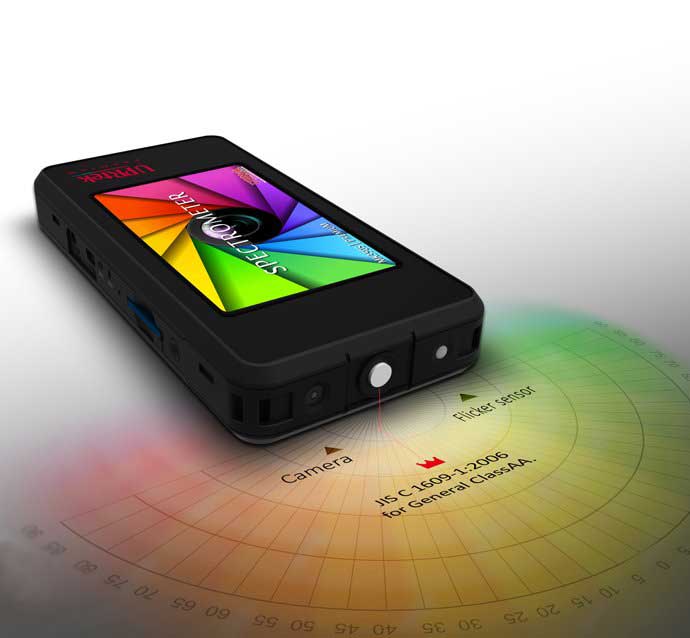
Handheld Spectrometers are used by University professors, teachers, lab assistants for lighting academics and research.  They are an all-purpose spectral light measurement tool providing teaching visuals,  research data collection facilities and a full range of application features and metrics.
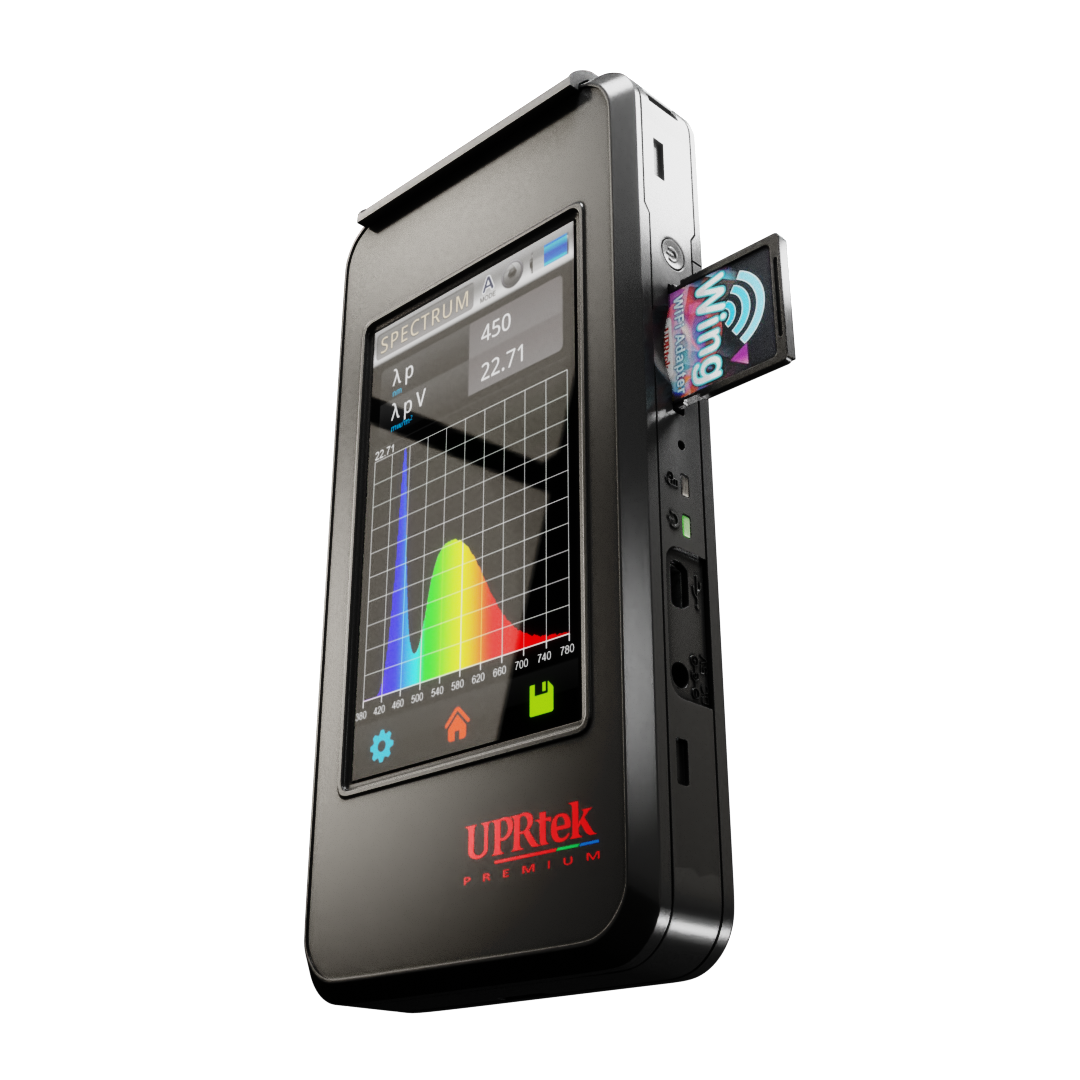
MK350S and Wing Wireless Card

MK350S Premium Spectrometer

From Classroom to Office to Laboratory

University professors, teachers, and lab assistants reach for handheld spectrometers for exactly this kind of work — versatile tools that turn abstract light into teaching visuals, research data, and a long list of measurable metrics. And light does more than we tend to give it credit for: it shapes visual comfort, human health, biological rhythms, plant growth, animal behavior, material response, even how reliable an imaging system turns out to be.

That’s why characterizing light accurately isn’t a side task for educators and researchers — it’s part of understanding, controlling, and documenting the experiment itself.


Why Light Measurement Matters in Research

Light is amorphous, subjective and difficult to measure. It’s steeped in science and physics, and it’s a hard topic for students to grasp. Traditional spectral instrumentation (integrating sphere) may be ok for the laboratory, but it’s impractical for a number of teaching reasons (bulky, immobile and slow).
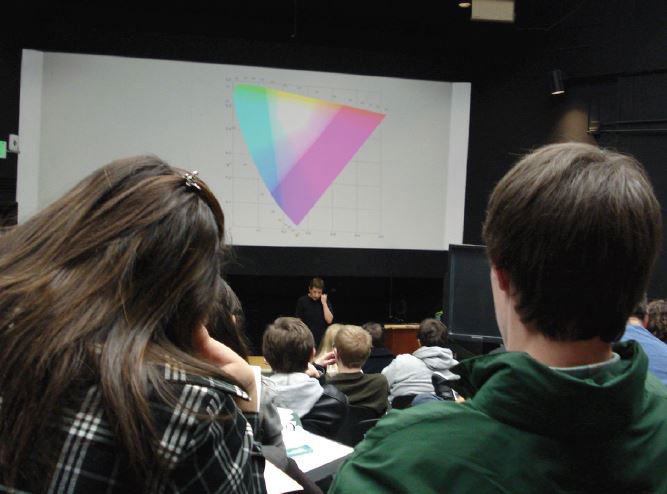
Two light sources can hit the exact same illuminance and still be worlds apart in spectral power distribution, color characteristics, flicker, or biological effect. So if a study only records the lamp model, wattage, or lux reading, that’s often not enough to interpret — or reproduce — the results. A spectrometer is what makes the invisible part of the light, the spectral and photometric detail, visible.

What is Light and where does it come from?

Dispersive_Prism_Illustration_by_Spiggetwikicommons

Academics Are Turning to Handheld Spectrometers

A lot of university researchers land on UPRtek spectrometers for teaching and research, and it’s not just about being portable and easy to use — the measurement accuracy holds up to lab-grade standards. Under the hood, they use diffraction gratings paired with CMOS linear image sensors for precise wavelength differentiation, and they’re built around industry certifications and relevant standards, with a rich set of lighting metrics on top.

The same instrument can travel from the office to a classroom, a lab, a greenhouse, a hospital ward, a museum, or a field site — which closes a lot of the gap between what happens in a controlled experiment and what happens in the real world.

UPRtek Certificates and Awards

Classroom Visuals and Demonstrations

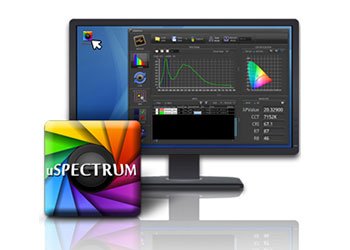
UPRtek spectrometers can cable connect to PCs/laptops using the uSpectrum PC software. This allows teachers full operations of the UPRtek device from the PC. It also allows you to display full screen view on large classroom screens by connecting the PC up to projectors or large classroom monitors.

In-class demos are easy to setup and you can easily recall previous graphical and numerical data for review. Compare different lamps, filters, dimming levels, or viewing conditions in real time, and students can watch theory turn into an actual spectral curve and a set of numbers right in front of them. Past measurements stay on hand too, ready to pull up for discussion, assignments, or side-by-side comparison.
Read about our uSpectrum products

Research Applications Across Academic Disciplines

UPRtek instruments show up across a genuinely wide range of disciplines. Depending on the study, that might mean characterizing an experimental light source, confirming treatment conditions, measuring right at the subject or sample, tracking stability over time, or documenting environmental lighting out in the field.

  • Human health and circadian research: indoor lighting, sleep, light exposure, healthcare environments and human-centric lighting.

What is Human Centric Lighting?

  • Psychology and environmental studies: museums, workplaces, classrooms and public spaces where lighting may influence perception, emotion and behavior.

Light and Visual Safety

  • Plant science and agriculture: spectral treatments, PPFD, photoperiod, UV, far red, photosynthesis, propagation and crop production.

What is a PAR Meter and why it’s an essential tool

  • Ecology and animal science: street lighting, light pollution, habitat conditions, animal welfare and behavioral studies.

Sustainable Lighting Design for Seabird Conservation

  • Engineering and applied science: materials, photochemistry, photogrammetry, machine vision, optical sensing and instrument validation.

How to Choose the Right Protein Detection Method?

From Controlled Laboratories to Real-World Field Studies

Being portable means researchers can measure light exactly where the experiment happens — a controlled lab, a plant factory, a greenhouse, a hospital ward, a museum gallery, a classroom, an office, an animal facility, a city street, or an outdoor ecological site. Measuring right at the subject, sample, canopy, or work plane catches conditions a lamp spec sheet alone would miss, and it makes comparing lab settings against the real world a lot more consistent.

uSpectrum read data

Lighting Data Collection and Research Reproducibility

UPRtek spectrometers are equipped with full data storage facilities, including SD card storage and export capabilities.  All information including numerical and graphics are stored as seen on the device screen and are easily recalled. Information is easily exportable as excel ready data. Documenting lighting conditions in full is what lets other readers actually understand how an experiment was run — and lets other researchers compare against it or reproduce it.
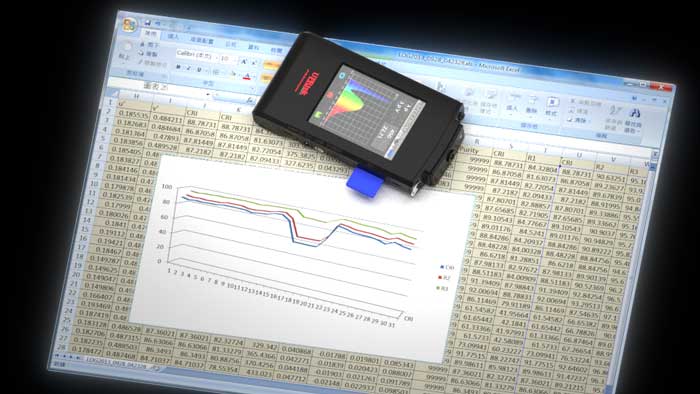
Depending on the research objective, that might mean recording the light source, measurement distance and geometry, spectral power distribution, illuminance or irradiance, chromaticity, CCT, PPFD, flicker characteristics, and the time and location of measurement. Exported data can then be organized, visualized, and set alongside biological, behavioral, environmental, or engineering results — light measurement becomes part of a traceable workflow, not a one-time equipment check.

Read SD Card Data-uSpectrum

Key Metrics for Teaching and Research

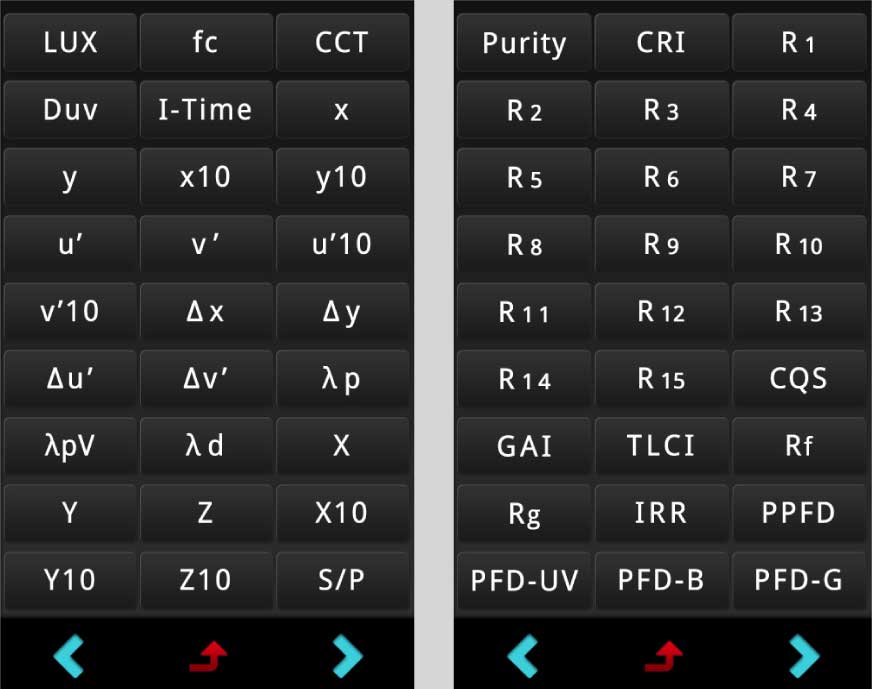
The MK350S Premium product is research ready with the most feature rich set of all of our products:

  • Agricultural Lighting Metrics (PPFD, PFD)
  • Flicker, Blue Light Hazard
  • Human Centric Lighting
  • CRI, TLCI, CQS
  • CIE 1931/1976
  • CCT, LUX
  • Spectral power distribution and wavelength-based comparisons
  • Melanopic and other biologically relevant lighting metrics, where applicable.

How Researchers Use UPRtek Instruments

UPRtek instruments aren’t just for testing lamps — they can be part of the experimental method itself. Researchers use them to check light treatments before a study starts, track changes as an experiment runs, compare multiple environments, and back up the materials and methods section of a paper with actual numbers.

  • Characterize and compare experimental light sources.
  • Verify lighting conditions before and during experiments.
  • Measure at the eye, sample, plant canopy or target surface.
  • Monitor spectral, photometric or flicker stability over time.
  • Record data for methods documentation and subsequent analysis.
  • Use a trusted reference when validating a newly developed measurement system.

UPRtek Instruments in Published Research

It’s not just teaching and lab demos, either — UPRtek instruments show up in peer-reviewed studies across a genuinely wide range of fields: sleep and indoor lighting, museum and healthcare environments, neuroscience, urban ecology, analytical chemistry, plant physiology, plant factories, optogenetics, lab animal welfare, photogrammetry, agricultural engineering.

Across all of that, the common thread is the same — portable spectral measurement backing up controlled experiments and field investigations with documented spectral distributions, illuminance, irradiance, PPFD, color characteristics, and flicker conditions.

Explore Published Research Using UPRtek Instruments

Which Industries Need Human Centric Lighting Design-Healthcare Industries

Human Health

how to use Grow Lights for Plants? about setting

Plant Science

western blot imaging system:What machine is used for western blot

Engineering

Choosing the Right Instrument for Your Research

Which instrument makes sense really comes down to wavelength range, required metrics, light level, accuracy target, and how the experiment’s set up. General lighting, color, human-centric lighting, and flicker studies tend to fit well with the MK350S Premium or MK350N Premium.

Plant-lighting and photon research usually points to the PG200N, and UV work is better served by the UV100N. If you need spectroradiometer-level performance or display measurement, the MK550T or MD100N is probably the better fit.

Getting this choice right up front means avoiding the headache of incomplete or irrelevant data later — and UPRtek can help researchers walk through their measurement objectives and land on the right configuration.

What is a Spectrometer, Spectrophotometer, and Spectroradiometer? What’s the Difference?

Lighting Metrics Articles

Grow lights Articles

MK350S Premium with Purity, LUX and Lambda D

MK350S Premium

PG200N Spectral PAR Meter Thermo Hygro Cable

PG200N

MK550T Spectroradiometer

MK550T

 Spectrometer Teaching and Research Tool

Teaching about light concepts is difficult.  You need graphical and numerical data from many different perspectives. You need to  present data from recorded information or from real time demonstrations. You need to collect research data and then export for analysis.  University academics are turning to handheld spectrometers as a tool to tackle all these tasks – from lab, to classroom, to office.
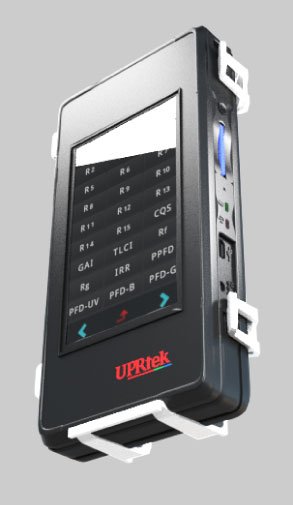
Portable measurement, visual presentation, data storage, and export — all in one device. That combination is what lets UPRtek spectrometers bridge teaching, experimentation, and scientific communication, and it’s what lets researchers and educators go from simply observing light to actually describing it with data.

Handbook Series

The Flicker Handbook

Everything thing you need to know about Flicker, an insidious, potentially serious lighting artifact impacting visual safety for public places like hospitals, offices, libraries, and more...

▸ Get it!

About UPRtek

United Power Research and Technology

UPRtek (est. 2010) is a manufacturer of portable, high-precision light measurement instruments; Handheld Spectrometers, PAR meters, Spectroradiometers, Light Calibration Solutions.

UPRtek HQ, R&D and manufacturing are all based out of Taiwan, with Worldwide representation through our certified Global Resellers.

▸ Read on

UPRtek at B&H

Category